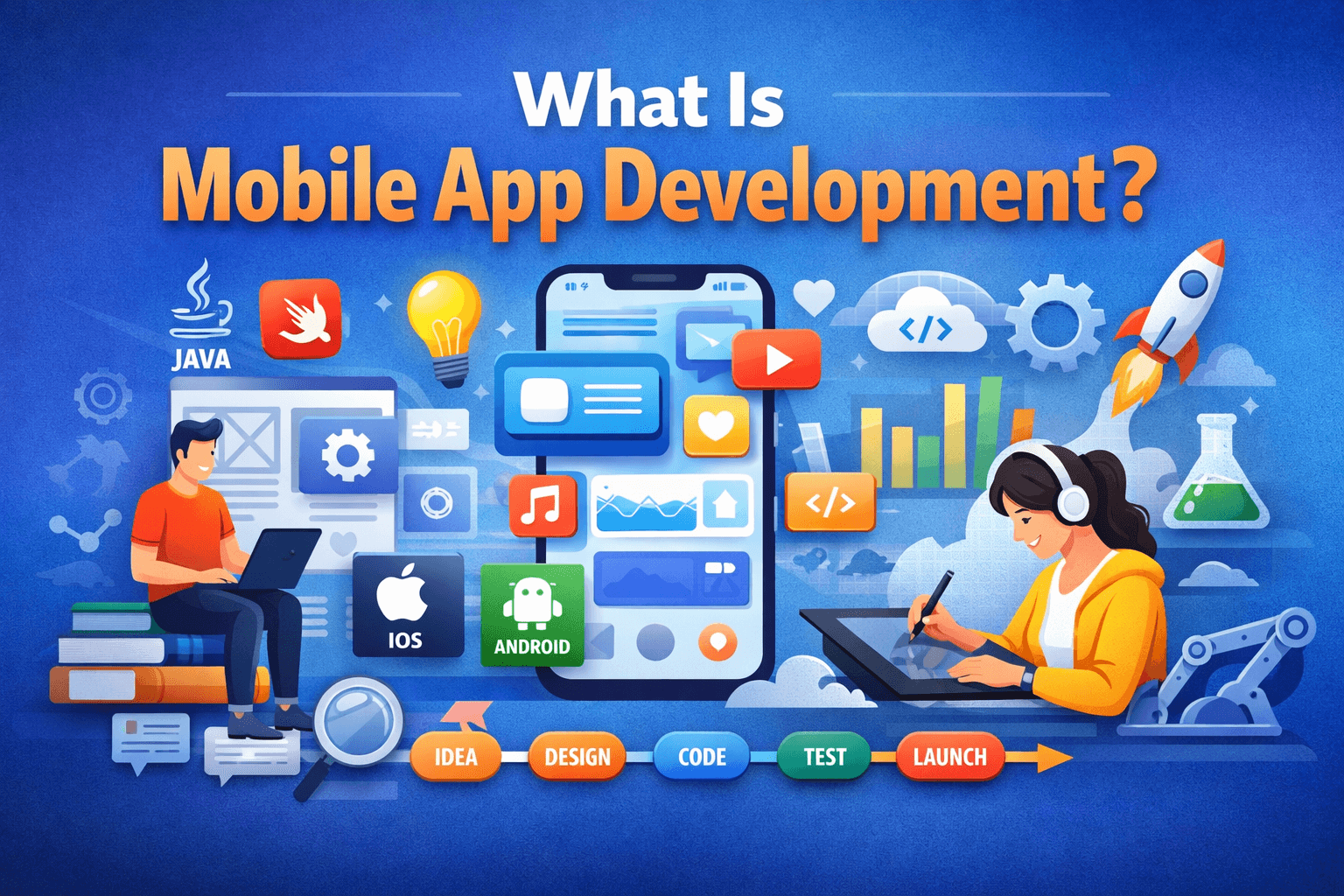
Mobile phones are no longer just communication tools. They are platforms for shopping, banking, learning, entertainment, and running entire businesses. Behind every app you use daily is a structured engineering process known as what is mobile app development.
This guide explains mobile app development in simple terms, covers real-world examples, technologies, and processes, and helps you understand how apps are actually built and maintained.
What Is Mobile App Development Definition
What is mobile app development refers to the process of designing, building, testing, and maintaining software applications that run on mobile devices such as smartphones and tablets.
A mobile application can be created for:
- Android devices
- iOS devices
- Or both using shared code
The goal of mobile app development is to deliver fast, secure, and user-friendly experiences that solve real problems.
What Is a Mobile Application?
A mobile application is a software program installed on a mobile device that performs a specific function, such as:
- Ordering food
- Booking a ride
- Managing finances
- Tracking fitness
- Running a business workflow
Apps can be downloaded from app stores or installed directly on enterprise devices for internal use.
What Is a Mobile App Developer?
A mobile app developer is a professional who designs and builds applications for mobile platforms. Their responsibilities often include:
- Writing application code
- Integrating APIs and databases
- Ensuring performance and security
- Testing on real devices
- Fixing bugs and releasing updates
Some developers specialize in Android, some in iOS, while others work on cross-platform solutions.
What Language Is Used for Mobile App Development?
The programming language depends on the platform and development approach.
Commonly used languages include:
- Java and Kotlin for Android
- Swift and Objective-C for iOS
- JavaScript and TypeScript for cross-platform apps
- Dart for Flutter-based development
Choosing the right language affects performance, cost, and long-term maintenance.
What Is Native Mobile App Development?
What is native mobile app development means building apps specifically for one platform using its official tools and languages.
Examples:
- Android apps built with Kotlin or Java
- iOS apps built with Swift
Native apps offer:
- High performance
- Better device integration
- Strong security
- Smooth user experience
They are ideal for apps that need speed, advanced features, or heavy device usage.
What Is Hybrid Mobile App Development?
What is hybrid mobile app development refers to creating apps using a single codebase that works on multiple platforms.
Hybrid apps typically use:
- Web technologies like HTML, CSS, and JavaScript
- A wrapper that allows access to device features
This approach reduces development time and cost but may have performance limitations compared to native apps.
What Is Mobile App Development Platform?
A mobile app development platform provides tools, libraries, and services to build and manage mobile applications.
Examples include:
- Android Studio
- Xcode
- Cloud-based mobile backend platforms
- Low-code or no-code mobile builders
Platforms help developers handle deployment, testing, updates, and analytics.
What Is Mobile App Development Framework?
A mobile app development framework is a structured environment that simplifies coding and speeds up development.
Popular frameworks include:
- Flutter
- React Native
- Xamarin
- Ionic
Frameworks allow developers to reuse code, maintain consistency, and build apps faster across platforms.
What Is Mobile App Development Using Android?
What is mobile app development using Android involves building applications for devices running the Android operating system.
Android development typically includes:
- Kotlin or Java programming
- Android SDK usage
- Material Design principles
- Google Play Store deployment
Android apps support a wide range of devices, making testing and optimization critical.
What Is Mobile App Development Technologies?
Mobile app development technologies include the tools and systems used to build, run, and maintain apps.
These technologies often include:
- Programming languages
- Frameworks and SDKs
- Cloud services
- Databases
- APIs
- Security tools
The right technology stack depends on the app’s purpose, user base, and performance needs.
What Is Mobile App Development Process?
The mobile app development process follows a structured path to reduce risks and ensure quality.
Typical steps include:
- Idea and requirement analysis
- UI and UX design
- Application development
- Testing and quality assurance
- Deployment to app stores
- Monitoring and updates
Skipping steps often leads to poor user experience or costly rework.
What Is Mobile App Development Lifecycle?
The mobile app development lifecycle describes the complete journey of an app from idea to long-term maintenance.
Lifecycle stages include:
- Planning
- Design
- Development
- Testing
- Release
- Continuous improvement
Successful apps treat the lifecycle as ongoing, not a one-time project.
Mobile Application Development Example (Real-World Scenario)
A logistics company needed a driver tracking app.
The solution included:
- A mobile app for drivers
- GPS tracking
- Real-time updates for dispatch teams
- Secure login and role-based access
By following a structured mobile app development process, the company reduced delivery delays and improved customer satisfaction.
This is a practical mobile application development example where technology directly improved operations.
Why Mobile App Development Matters for Businesses
Mobile apps help businesses:
- Reach customers instantly
- Automate processes
- Improve engagement
- Collect valuable data
- Increase revenue
Whether it’s a startup or an enterprise, mobile apps have become a core digital asset.
What is Mobile Application - Final Thoughts
Understanding what is mobile app development is essential for anyone planning to build or invest in a mobile product. From choosing the right technology to following a clear lifecycle, every decision impacts performance, cost, and user trust.
When done correctly, mobile app development turns ideas into tools people rely on every day.